
A Foundation Rooted in Inquiry
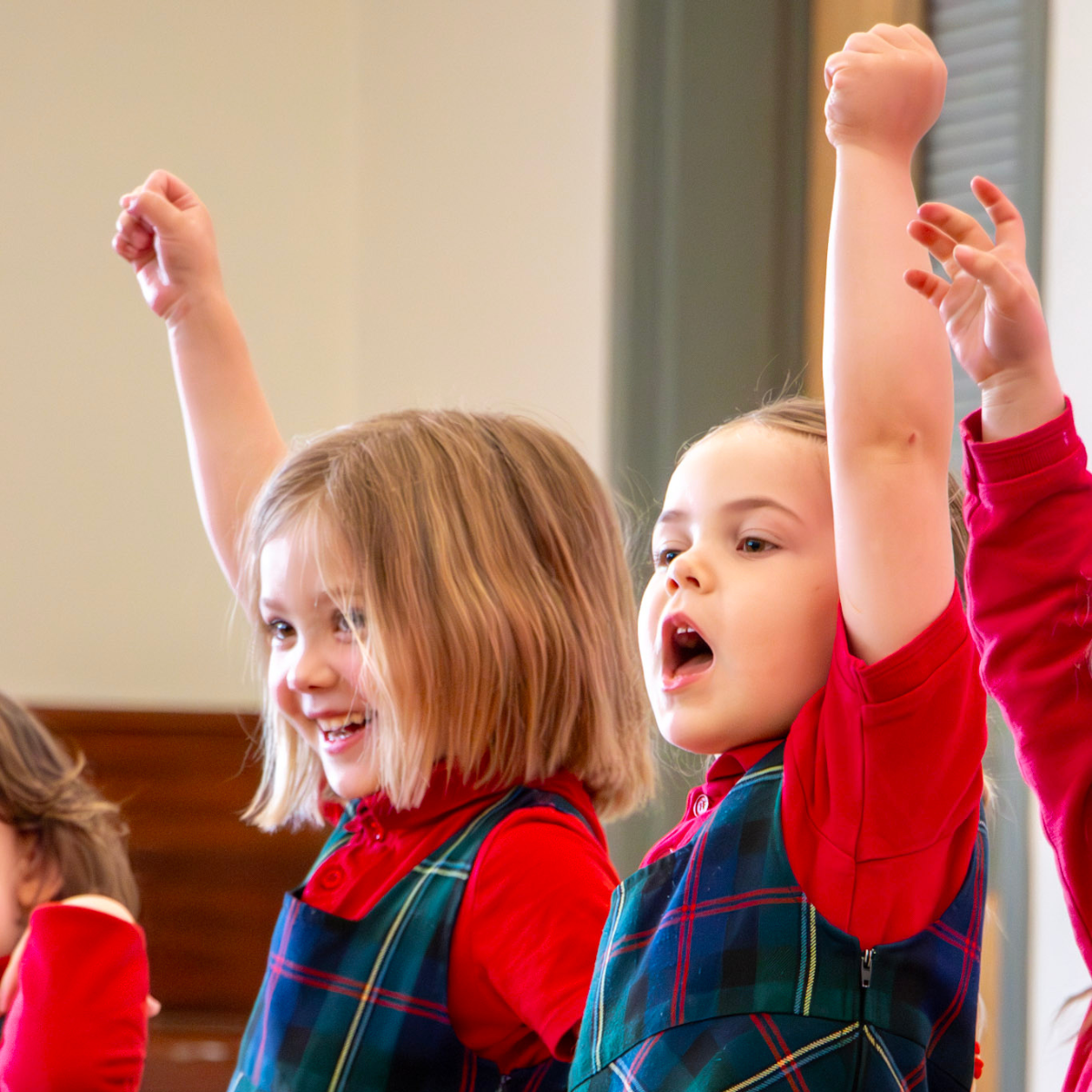
The IB Primary Years Programme (PYP) at St. Margaret’s School supports girls from Junior Kindergarten through Grade 5 as curious, caring learners who take increasing ownership of their education.
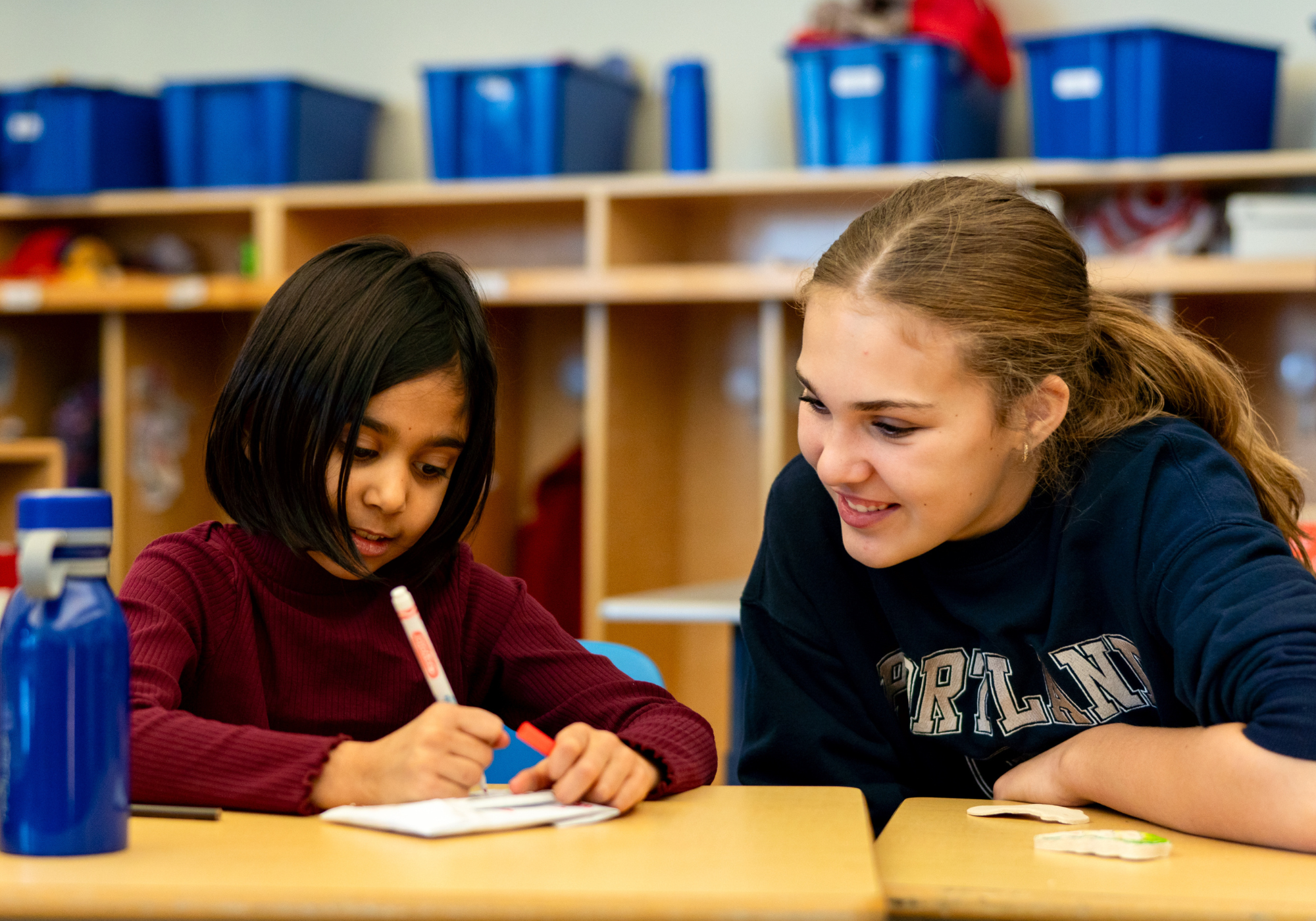
Students follow the British Columbia curriculum, with the IB PYP providing a framework for inquiry-based learning. Learners explore four units of inquiry in Junior Kindergarten and Kindergarten, and six from Grades 1–5, connecting subjects, real-world issues, and their own questions.
STEM and experiential learning give students regular opportunities to investigate, design, create, and problem-solve.
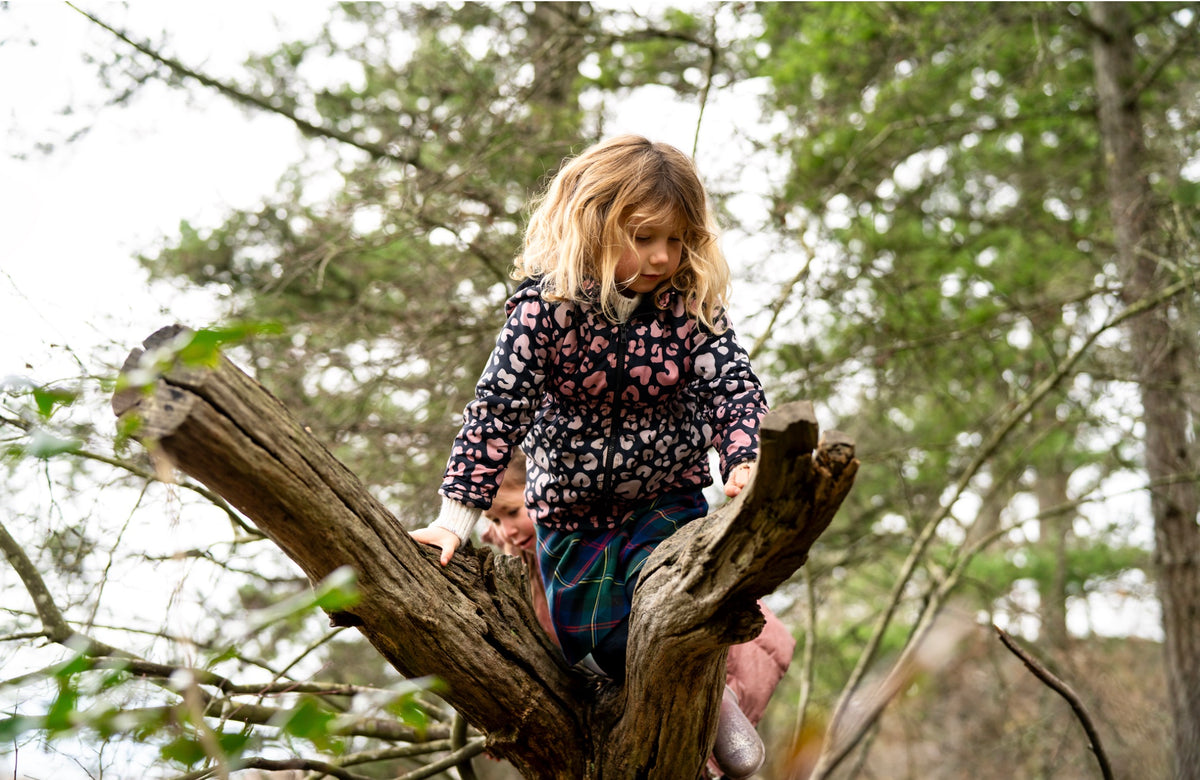
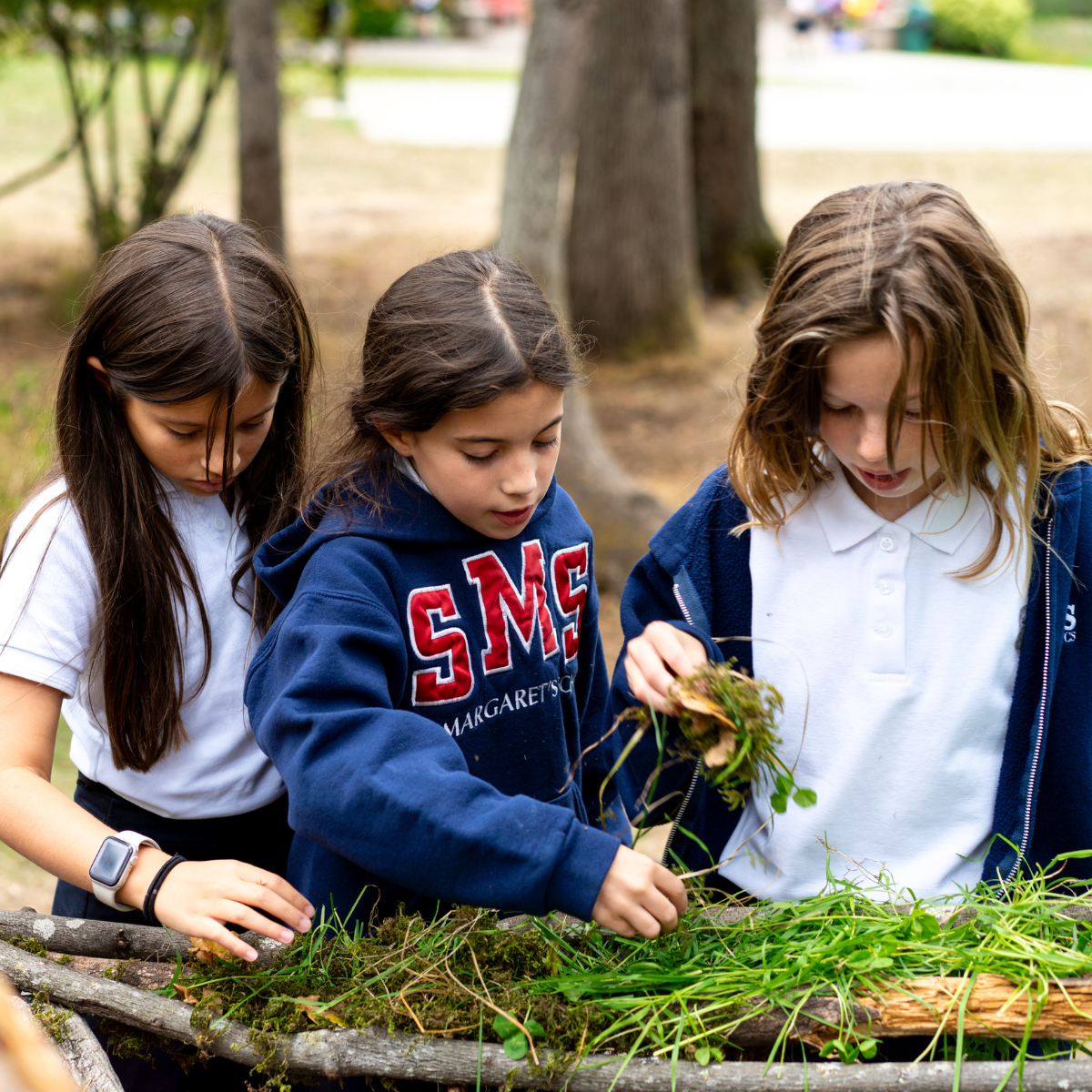
Our 22-acre campus extends learning into nature through forest walks, garden science, and outdoor exploration that strengthen observation, resilience, and environmental stewardship.
Leadership begins in Junior Kindergarten, with student voice developing through opportunities to communicate, contribute, and host monthly assemblies from Kindergarten onward.
Our partnership with an Indigenous Knowledge Keeper brings locally connected perspectives into learning across the PYP.
As a member of the International Coalition of Girls’ Schools (ICGS), SMS is also part of a global community committed to advancing girl-centred education.
What Makes the PYP at SMS Distinct
- Inquiry-based learning across subject areas
- British Columbia curriculum within the IB PYP framework
- STEM and experiential learning
- French language learning from Junior Kindergarten onward
- Nature-based learning across our 22-acre campus
- Leadership and student voice beginning in the early years
- Holistic development across academic, social, emotional, and physical learning
Six Transdisciplinary Themes
Each year, students explore six themes that frame inquiry across subjects, helping them see how knowledge connects across disciplines and cultures.
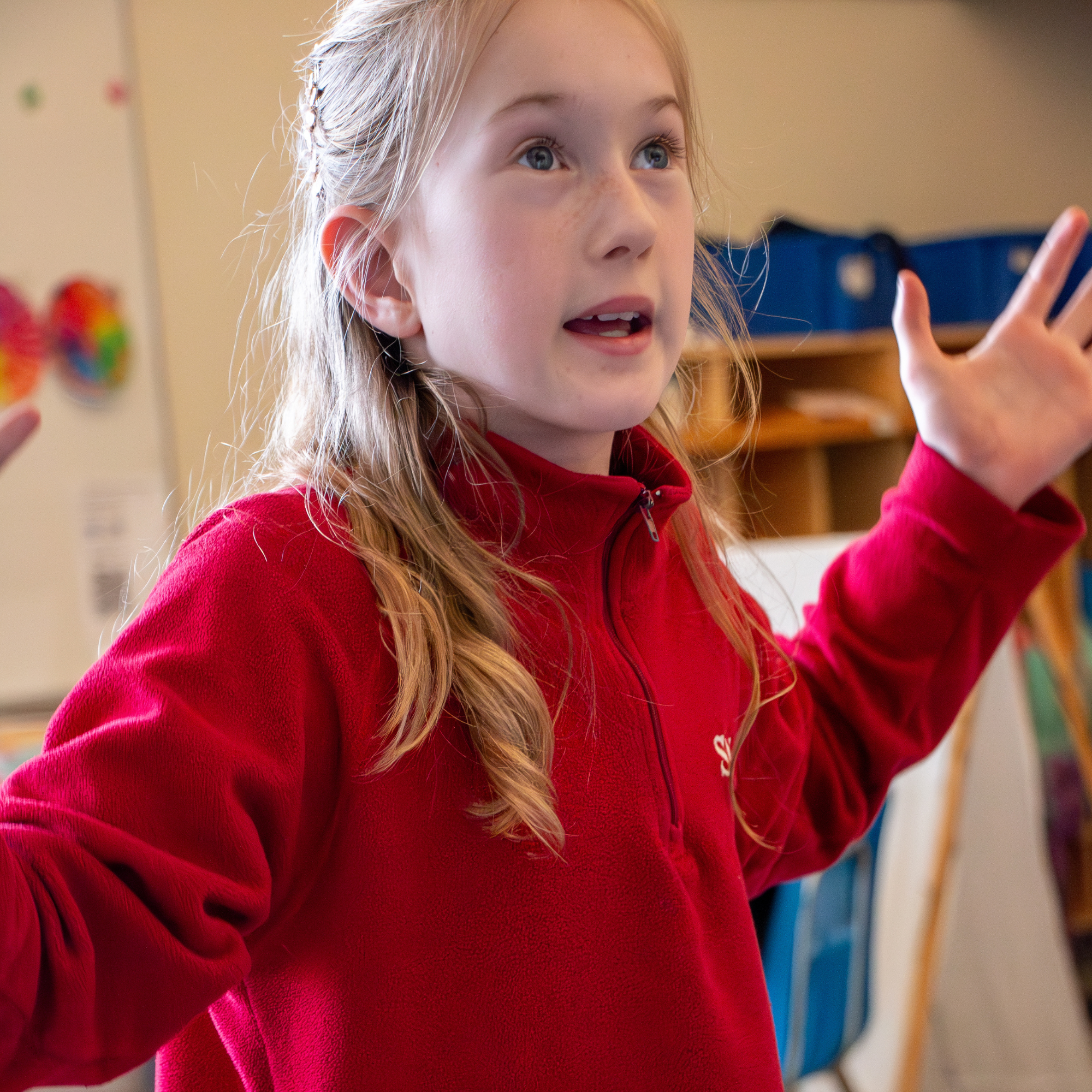
Who We Are
An inquiry into identity as individuals and as part of a collective through:
- Physical, emotional, social and spiritual health and well-being
- Relationships and belonging
- Learning and growing
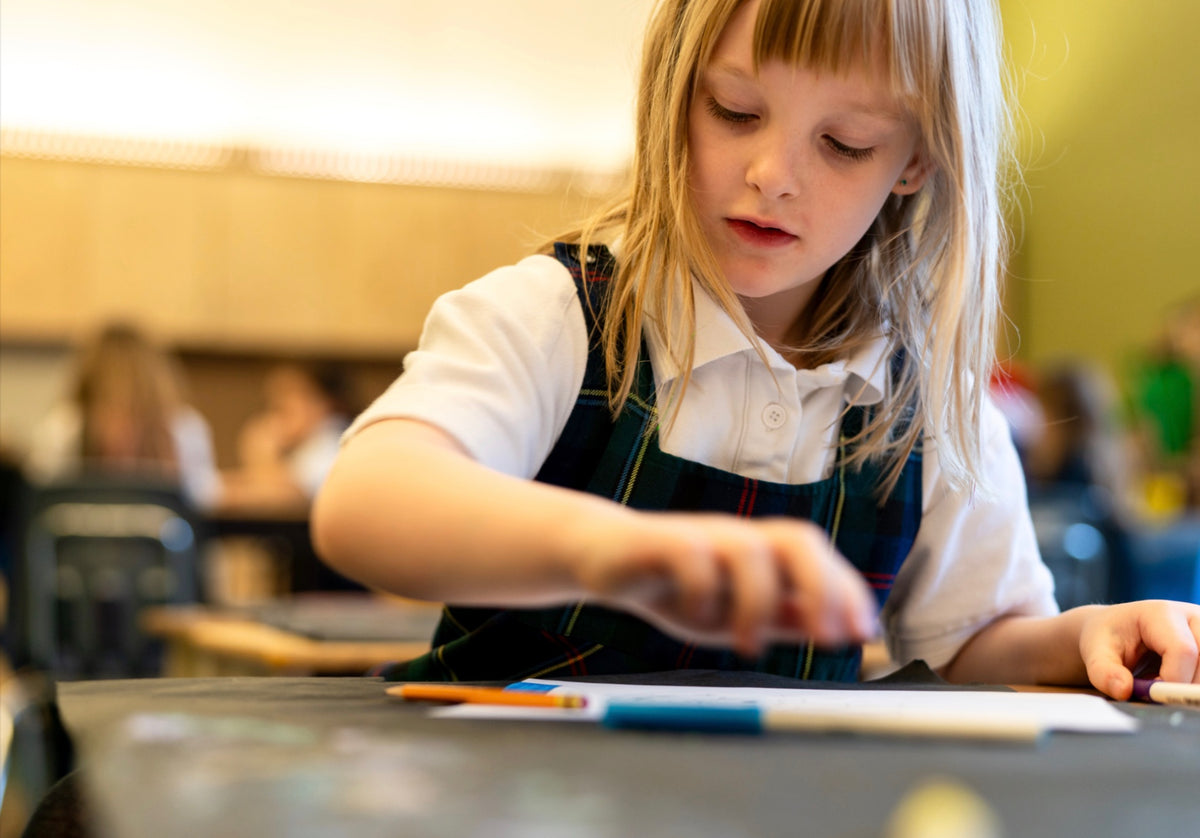
Where We Are in Place and Time
An inquiry into histories and orientation in place, space and time through:
- Periods, events and artefacts
- Communities, heritage, culture and environment
- Natural and human drivers of movement, adaptation, and transformation
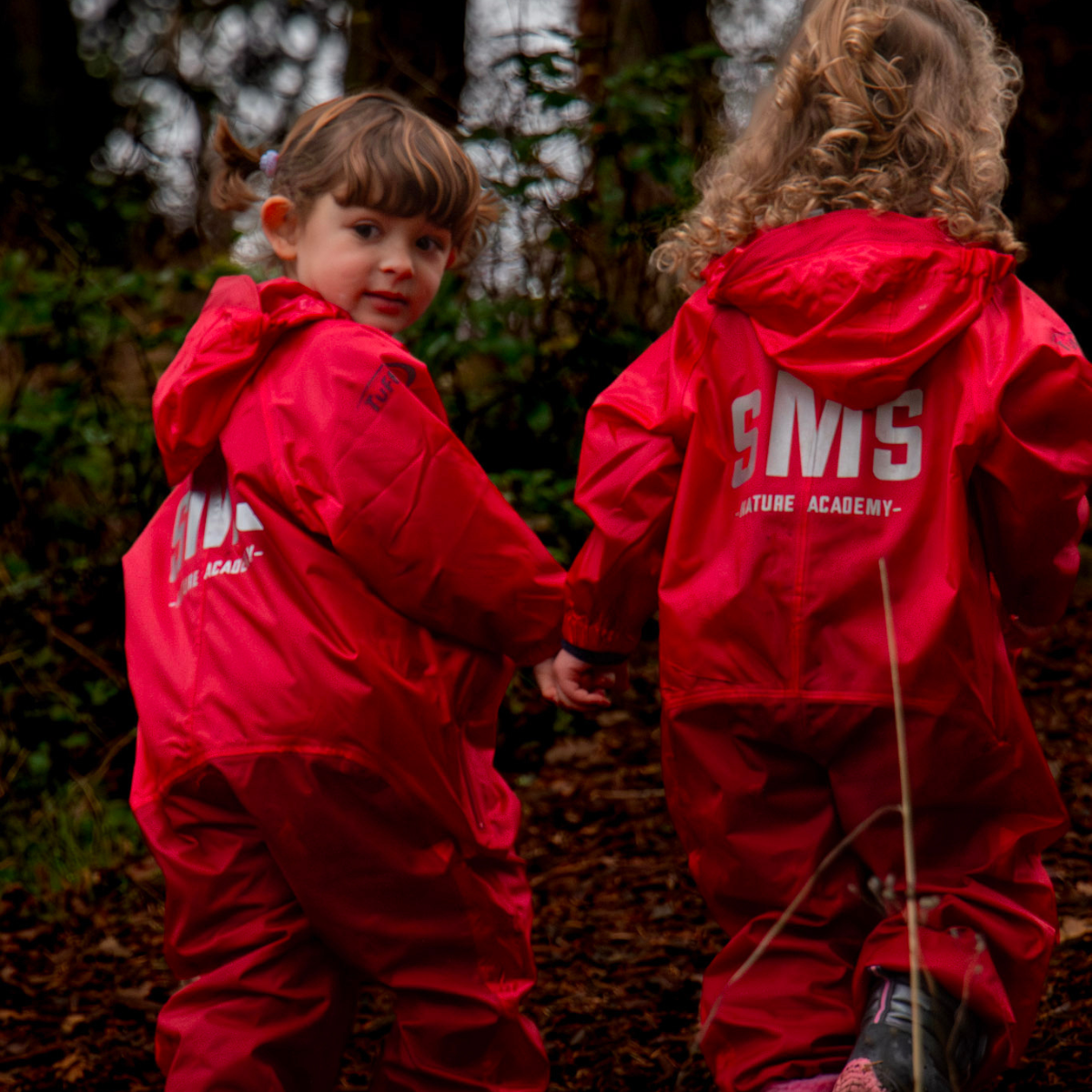
How We Express Ourselves
An inquiry into the diversity of voice, perspectives, and expression through:
- Inspiration, imagination, creativity
- Personal, social and cultural modes and practices of communication
- Intentions, perceptions, interpretations and responses
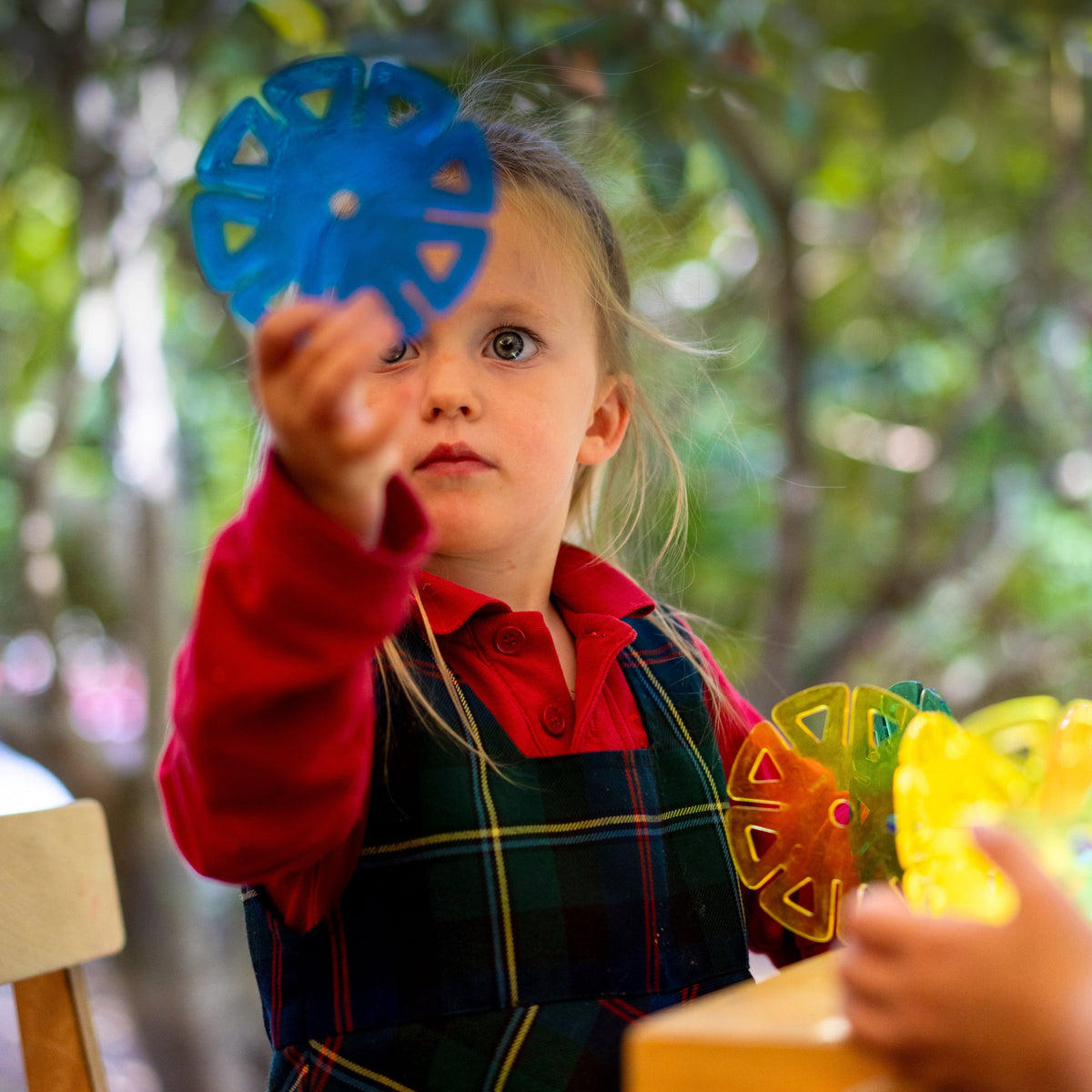
How the World Works
An inquiry into understandings of the world and phenomena through:
- Patterns, cycles, systems
- Diverse practices, methods and tools
- Discovery, design, innovation: possibilities and impacts
How We Organize Ourselves
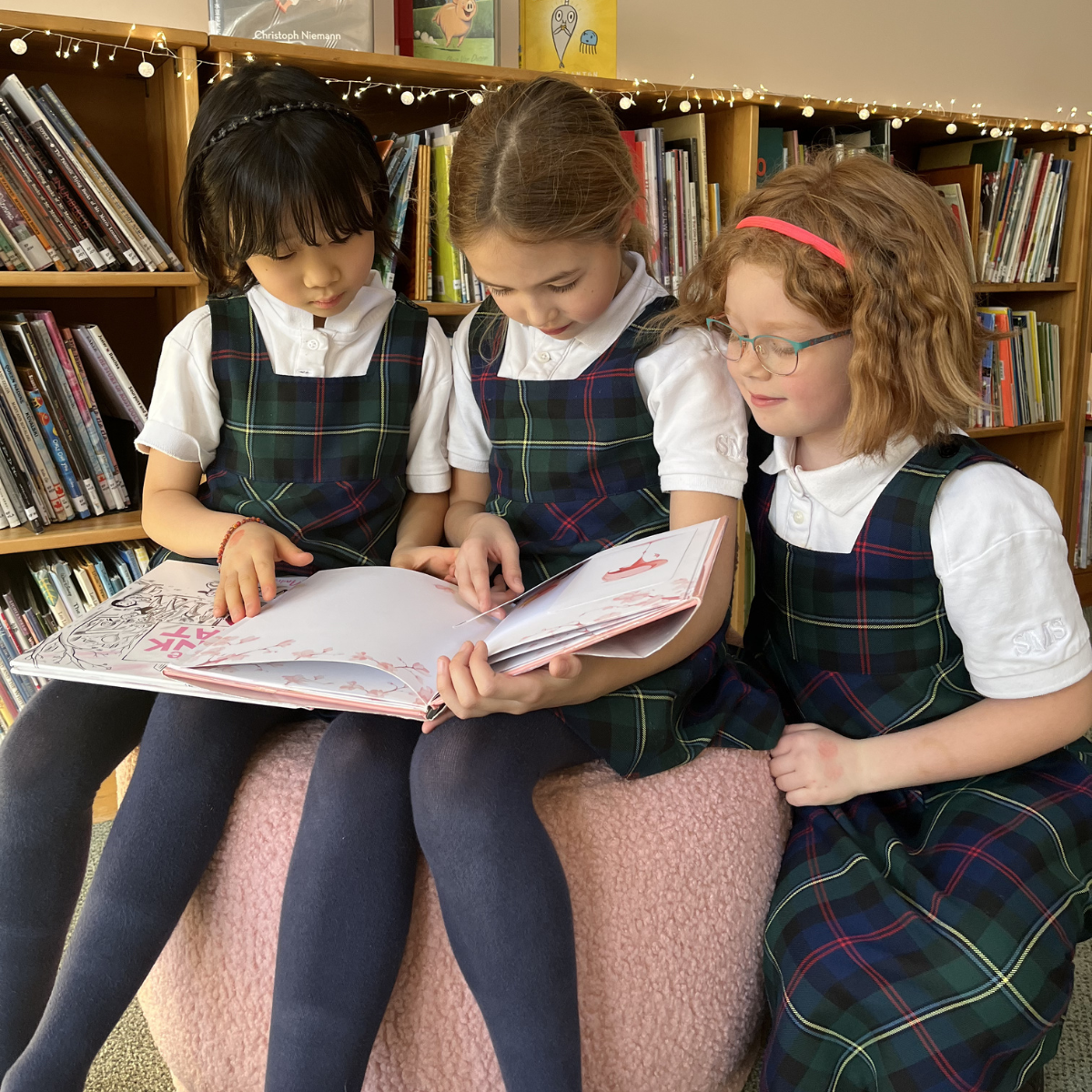
An inquiry into systems, structures and networks through:
- Interactions within and between social and ecological systems
- Approaches to livelihoods and trade practices: intended and unintended consequences
- Representation, collaboration and decision-making
Sharing the Planet
An inquiry into the interdependence of human and natural worlds through:
- Rights, responsibilities and dignity of all
- Pathways to just, peaceful and reimagined futures
- Nature, complexity, coexistence and wisdom
Transdisciplinary theme descriptors reflect the updated 2025 IB wording (IB Primary Years Programme — Transdisciplinary theme descriptors, published December 2024).
Nature-Based Learning
For our youngest learners in JK through Grade 2
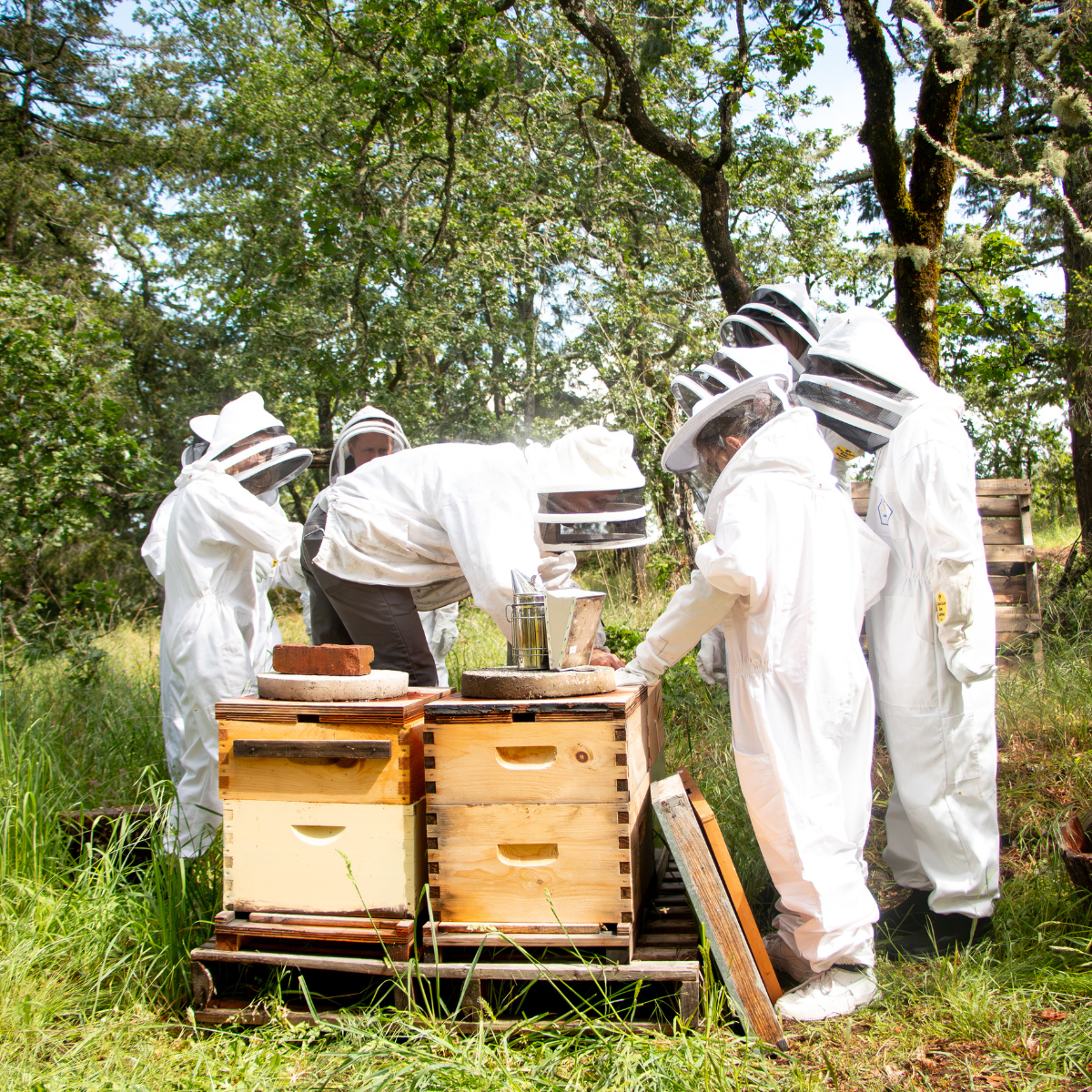
Our youngest girls spend significant portions of their week learning outdoors. Forest walks, garden science, and hands-on exploration build environmental stewardship and physical confidence alongside academic foundations.
By connecting directly with the natural world, students develop resilience, observation skills, and a sense of wonder that will carry them through the entire IB continuum.
The IB Learner Profile
Across the PYP, girls develop the ten attributes shared by all IB learners — the foundation that carries them through the Middle Years Programme and Diploma Programme. In their own words, here is what each attribute means to our students.
Inquirer
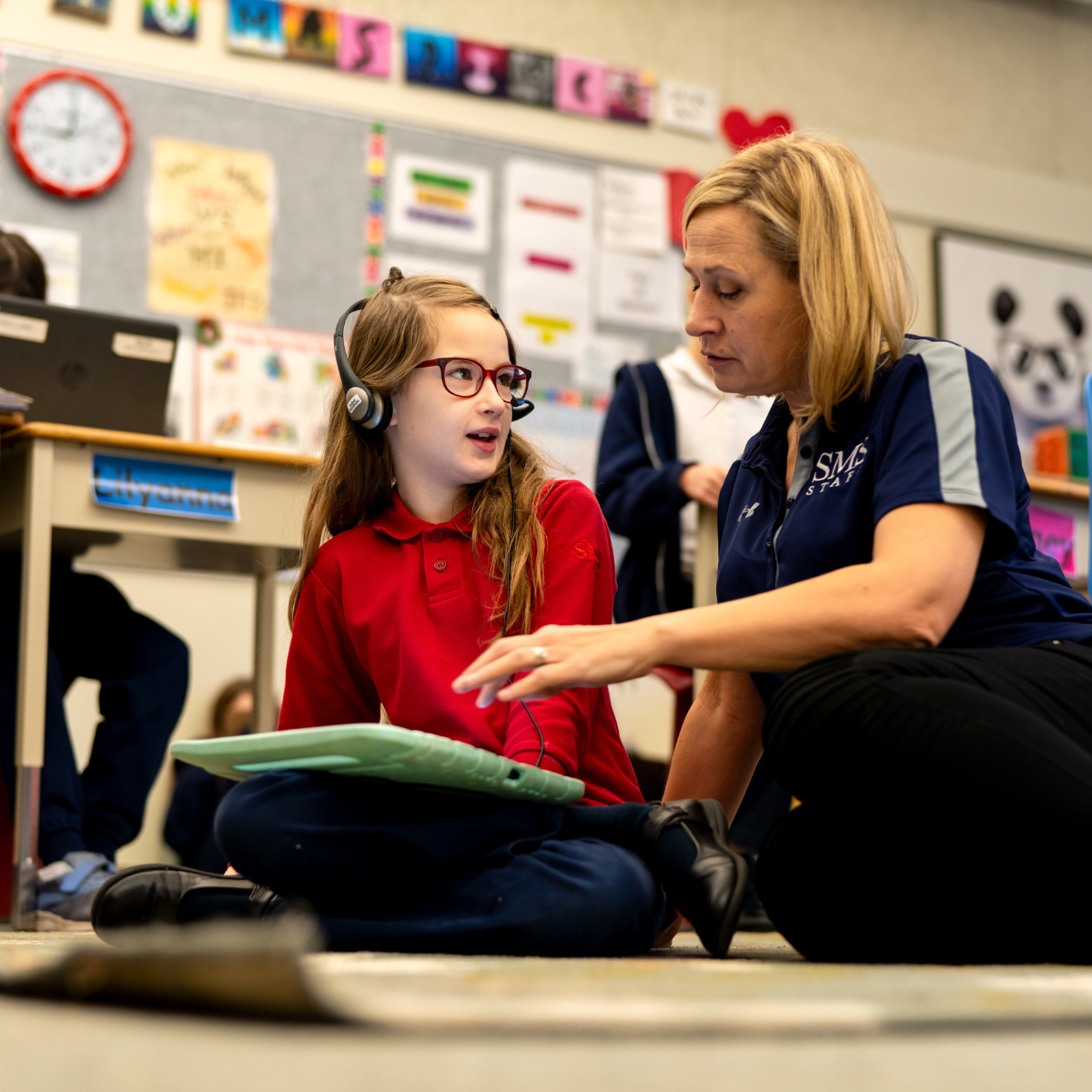
“I am an inquirer when I ask questions and learn from them” — Alice
Knowledgeable
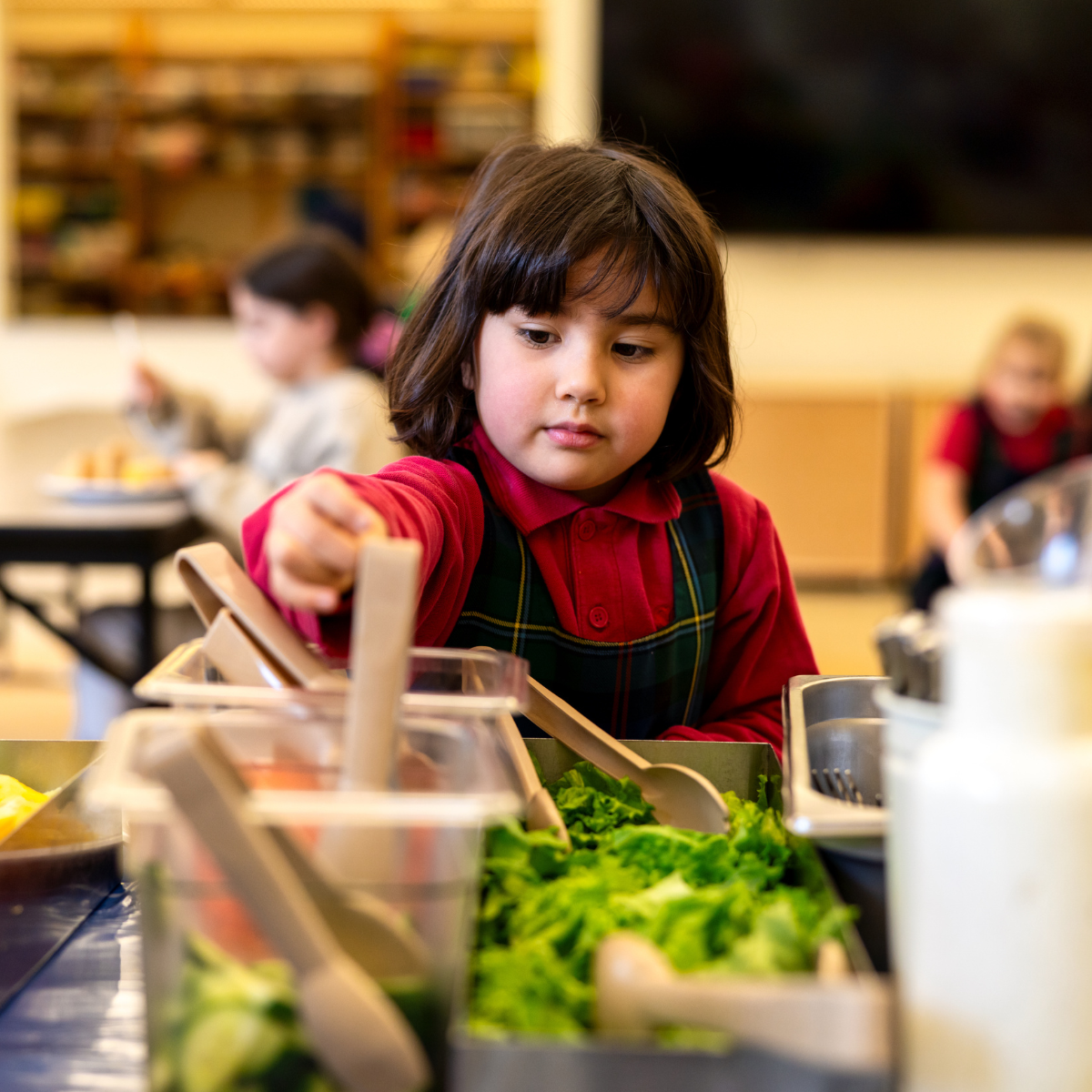
“I am knowledgeable when I learn from others and use my knowledge to help me understand” — Matilda
Open-minded
I am open-minded. That means that when I get ice cream, I want to see all the flavours, not pick before I see the flavours, and when I let my sister choose the game we play” — Edie
Thinker
“I am a thinker when I take my time to do my best work”— Zhara
Communicator
“I am a communicator when I share my ideas”— Kennedy
Principled
“I am principled when I help others when nobody is looking”— Ayumi
Caring
“I am caring when I have good sportsmanship in PE”— Roya
Risk-taker
“I am a risk-taker when I make mistakes and try again”— Hana
Balanced
“I am balanced when I rest”— Abby
Reflective
“I am reflective when I take my time”— Charlotte
St. Margaret’s School is a Candidate School* for the Primary Years Programme. This school is pursuing authorization as an IB World School. These are schools that share a common philosophy—a commitment to high quality, challenging, international education that St. Margaret’s School believes is important for our students.
*Only schools authorized by the IB Organization can offer any of its four academic programmes: the Primary Years Programme (PYP), the Middle Years Programme (MYP), the Diploma Programme, or the Career-related Programme (CP). Candidate status gives no guarantee that authorization will be granted. For further information about the IB and its programmes, visit www.ibo.org
Interested in our Primary Years Programme?